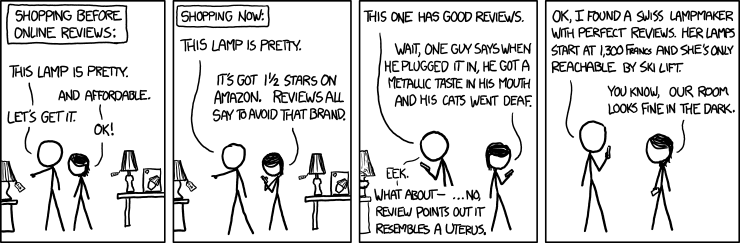
The web comic may be an extreme example of the effects of social influence through online reviews, but it gets the point across. As we mentioned in class, reviews need to be taken with a grain of salt, and if everyone relied solely on reviews to determine their purchases, well, a lot less things would be purchased, for fear of defects. Consumers have their own opinions of products and look at reviews to verify their opinion is well founded.
My second point is on the unpredictability of markets, specifically the Tulip Bubble which happened in Holland between 1634-1637. It is described in detail in "A Random Walk Down Wall Street" by Burton G. Malkiel (A National Bestseller). Here's a few excerpts from the book:
"Slowly, tulipmania set in. At first, bulb merchants simply tried to predict the most popular variegated style for the coming year, as much as clothing manufacturers do in gauging the public's taste in fabric, color, and hemlines. The they would buy an extra large stockpile to anticipate a rise in price. Tulip-bulb prices began to rise wildly."(pg. 35)
"People who said the prices could not possibly go higher watched with chagrin as their friends and relatives made enormous profits."(pg. 36)
Obviously at some point the prices got so high, but bubble broke, and there were 20 fold decreases in tulip prices. We've had tons of speculative bubbles since then, and if they were even a bit predictable, people would have figured out how to keep things from coming crashing down, but it's not that easy.

No comments:
Post a Comment